
Plan your stay
Ny-Ålesund is easy to reach, but every visit needs careful planning. This guide follows the order you will do things in, from choosing a host institution to the in-brief on your first day.
1
Find your host institution
Kings Bay owns the land and most buildings. Ten institutions rent space long-term, and they assess, accept and host projects from their own countries. Procedures and deadlines differ between them.
Norwegian institutions
Chinese institutions
German and French institutions
Alfred Wegener Institute (AWI) and Institut Polaire Français Paul-Émile Victor (IPEV)
AWIPEV Arctic Research Base
management@awipev.euIndian institutions
Italian institutions
Japanese institutions
Korean institutions
Dutch institutions
UK institutions
Some countries run a peer review that decides which projects get access at no cost. In others, like Norway, the project must already be peer reviewed, and researchers are invoiced for the facilities they use.
2
Register and book in RiS
Research in Svalbard is one system for registering projects, booking facilities in Ny-Ålesund and applying to the Governor. Depending on your host, you register the project yourself or the host does it for you.
Open the RiS portalRead the RiS help and FAQ first.
Step 1 of 6
Define your project
New projects need a fieldwork period and a host institution in Ny-Ålesund. Svalbard Science Forum issues a RiS ID during working hours, and the booking button appears on your project page once it is ready. If the project is already registered, check and update it under My projects.
Step 2 of 6
Add the people
Every participant must be registered in RiS. It is easiest when new people register themselves, so the project leader can then search for them and add them.
Step 3 of 6
Set the fieldwork period
It runs from the first team member’s arrival to the last one’s departure, and is not the same as the project period. Never reuse an old fieldwork period by changing its dates. Add exact field locations so the Awareness module can flag other projects nearby.
Step 4 of 6
Book flights and rooms
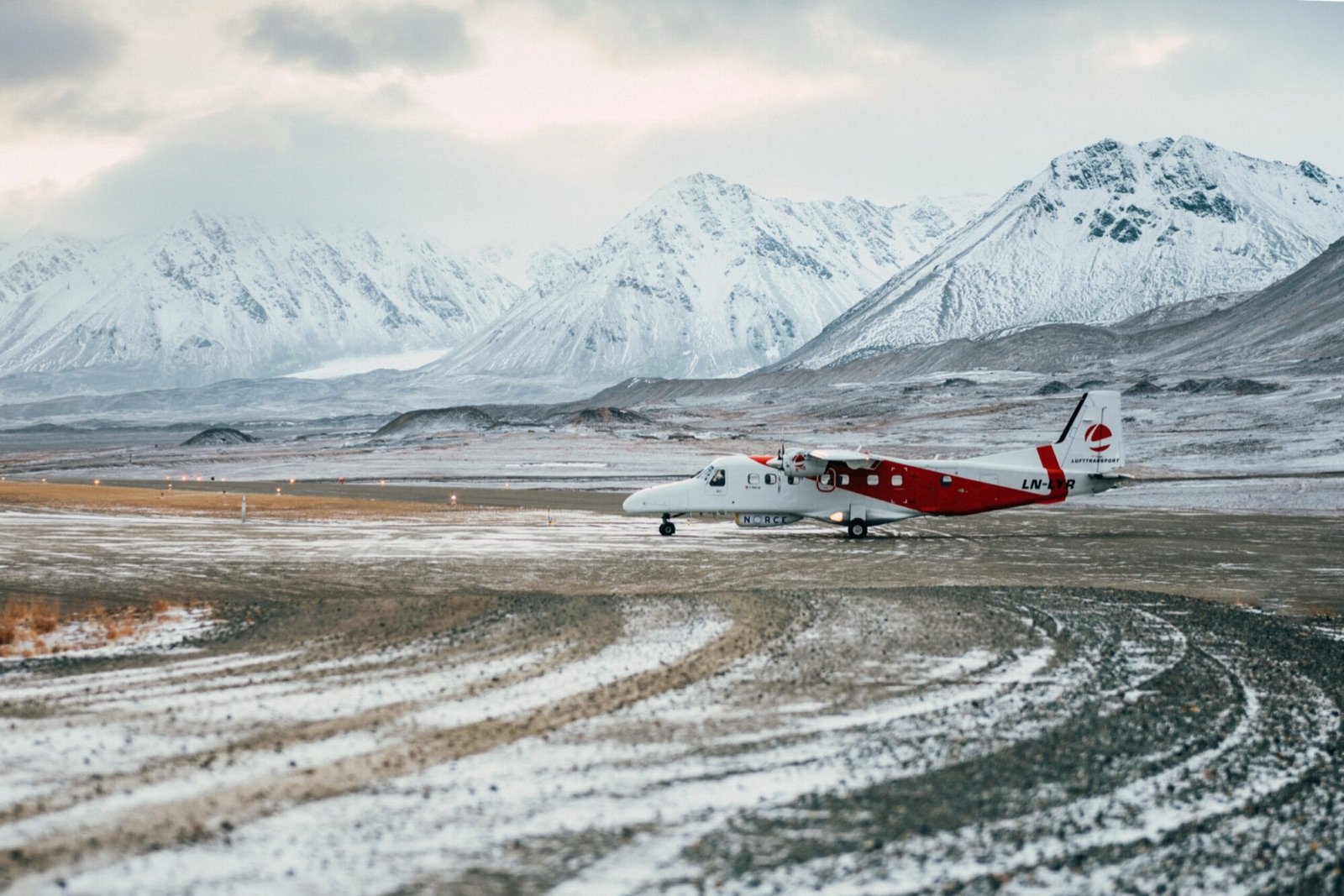
Add a separate flight for anyone arriving or leaving at a different time. Check seat availability in the Lufttransport schedule before you submit. Each ticket includes 20 kg of luggage, hand luggage included.
Step 5 of 6
Book equipment and labs
Snowmobiles, boats, the Marine Lab, MS Teisten and wet and dry labs are booked in RiS. Clothing and safety gear from NPI Sverdrup are requested separately from materialforvalter@npolar.no.
Step 6 of 6
Safety course, weapons and invoice
Sign up for the Kings Bay safety course and request a firearm in the same booking, but check first whether your host can lend you a rifle. Give a complete invoice address and a correct reference for electronic invoicing.
What happens after you submit
- 1You submitThe booking goes from RiS to your host.
- 2Host approvesYour host institution assesses and approves the project.
- 3Kings Bay approvesFlights, rooms, labs and other infrastructure are checked.
- 4ConfirmationYou get an email once both have approved. This takes a day or two.
Need to change something? Use the booking ID you already have. Don’t make a new entry, and wait until the booking is approved, since it can’t be changed while it waits.
3
Apply for permits in time
Most field activities need permission from the Governor of Svalbard, applied for through RiS. The Governor has four fixed deadlines a year, and inside the Ny-Ålesund planning area Kings Bay is consulted too.
All rules and permits15 Jan
Fieldwork March to May
1 Mar
Fieldwork June to August
1 Jul
Fieldwork September to November
1 Oct
Fieldwork December to February
- Polar night
- Day and night
- Never really dark
- Midnight sun
January
- Polar night until the end of January
- Governor deadline 15 January, for fieldwork March to May
February
- Day and night
March
- Governor deadline 1 March, for fieldwork June to August
April
- Never really dark from the beginning of April
- Midnight sun from mid-April
- High season begins
May
- Bird sanctuaries closed to all traffic from 15 May
June
- Midnight sun
July
- Governor deadline 1 July, for fieldwork September to November
August
- Bird sanctuaries reopen after 15 August
- Last month of midnight sun
September
- Nights darken again from mid-September
October
- Governor deadline 1 October, for fieldwork December to February
- Low season begins
November
- Polar night from mid-November
December
- Polar night
- Polar night
- Day and night
- Never really dark
- Midnight sun
4
Funding and access
You are expected to bring your own funding for travel, accommodation and any infrastructure or logistics. Several programmes support access, and some are aimed at specific facilities.
POLARIN Transnational Access
An EU project giving funded access to selected polar research infrastructure, including facilities in Ny-Ålesund.
eu-polarin.euSIOS Access Programme
Support for research that matches the goals of the Svalbard Integrated Arctic Earth Observing System, with access to infrastructure and data.
sios-svalbard.orgArctic Field Grant and Svalbard Strategic Grants
Calls from the Research Council of Norway that strengthen Arctic research.
forskningsradet.no
5
Arrival and in-brief
A representative from your host institution meets you when you land. Your in-brief covers the local information you need for your stay, including the risk assessment for your fieldwork.
- Safety course
- The day after you arrive, 4 hours
- Certificate
- Valid for three years